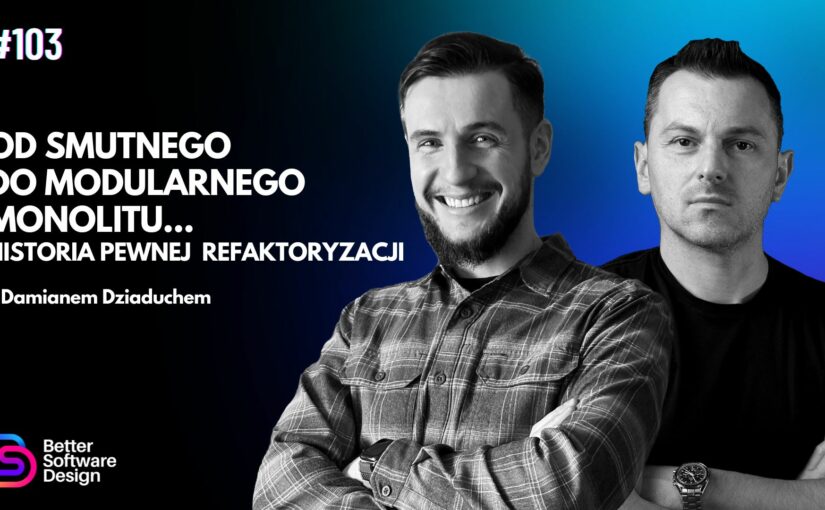
A few weeks before Boiling Frogs, I got a message from Mariusz Gil. He congratulated me on getting into the agenda and asked straight away — is your talk a real case study with actual content? When I said yes, he asked if I’d like to join Better Software Design and tell that story in a podcast episode.
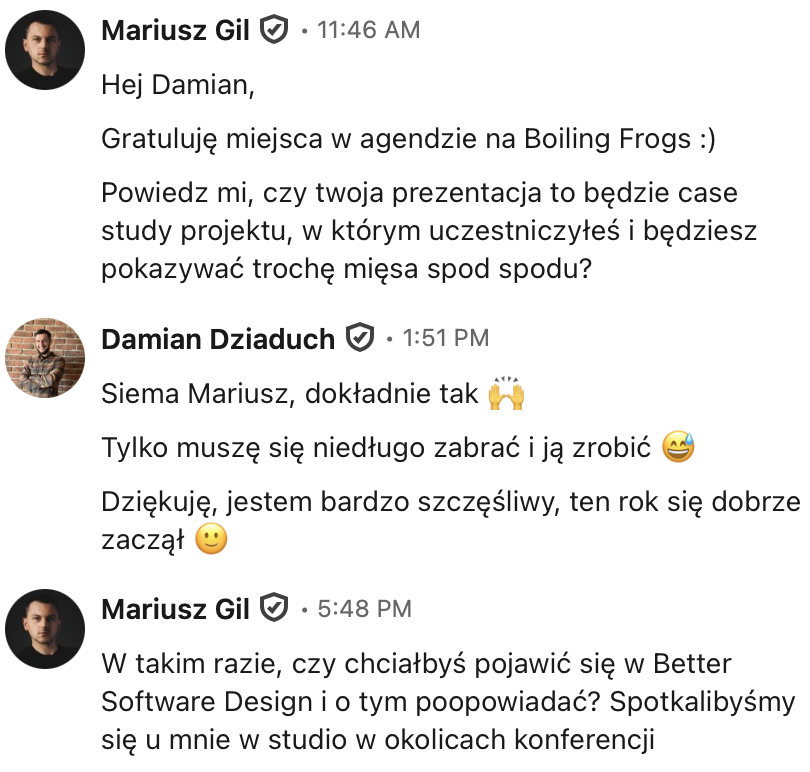
I have to be honest — I was stunned. Like, genuinely stunned.
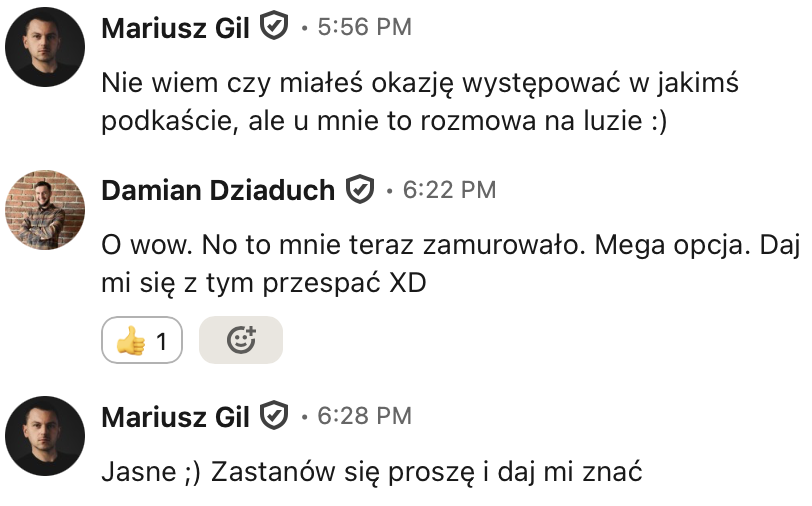
Getting into Boiling Frogs (I wrote about the whole experience in a separate post) felt within reach — I had a solid topic, I was well-prepared, and I believed in the story I wanted to tell. But this? I did not see it coming. I just stared at the message, not knowing what to write back 😂 I literally went to my wife and told her my jaw had dropped. Better Software Design was the podcast I put on to hear people who really know their stuff — and now someone was asking me to be one of them. I asked Mariusz for a day to think it over, and he came back with: yes, but after the conference. If I’m going to tell this story, I want to have it properly organised in my head first.
We recorded the day after Boiling Frogs, on a Sunday morning, at Mariusz’s studio in Wrocław.
Before we even started recording, we talked about bikes 🚲. Turns out Mariusz also rides — routes, tracks, gear. That small thing completely broke the ice. It reminded me that an invitation to a podcast doesn’t mean there’s some untouchable expert on the other side of the table. Mariusz is just a normal, friendly guy — which sounds obvious, but genuinely made a difference.
The studio itself is impressive. Professional setup, great equipment, the kind of space that quietly tells you: bring your best story. I sat down in the chair, looked at the microphone, and for a moment, I just thought about who had been sitting here before me. Then we started talking.
I was slightly nervous at the beginning 😅 But Mariusz has a real skill for pulling things out of you — he knew when to push, when to pause, when to fill a gap. The conversation flowed naturally. So naturally, in fact, we ended up talking for about two hours. I genuinely didn’t notice the time passing.
What Mariusz did with that raw material was impressive. He edited everything down, cut all the unnecessary bits, and assembled it in a way that flows really well. A few people I know reached out after listening with positive feedback — and that always means more than generic reactions online 🙂
One thing I appreciated a lot: the whole process was transparent. Mariusz kept me updated at every stage, and before publishing, he sent me the episode to listen to and verify. No surprises. That kind of approach builds real trust.
If you’re curious what a real-world PHP legacy refactoring looks like — why we did it, how we approached it, and what we’d do differently — the link is below 👇